Beyond the Mountain as far as one can see
Family and Heratige Beyond the Mountain
Some of the most valuable things we inherit have nothing to do with money, property or possessions. Sometimes, they are the words someone passes down to us that shape how we see the world for the rest of our lives.
My grandmother taught me two lessons that became part of my belief system.
“If you want something done, do it yourself.”
And:
“The richest person is the one who is content with the least.”
Two simple sayings, but together they have had a profound influence on how I approach life.
The first taught me independence. Take responsibility, make things happen, and don't always depend on others to do what needs to be done. But looking back, I realise this was quite the opposite of how she was raised. Coming from a highly respected family in Croatia, she was accustomed to a world where you delegate; where status meant others handled the physical work. But life in Australia, and the grueling reality of that mountain, forced her to adapt. She had to learn to do it herself because her new life demanded it.
The second taught me something equally important: never allow material possessions to determine your happiness. You can have ambition, build things, pursue ideas, and strive for accomplishment without becoming a prisoner of what you own.
I've often wondered whether these teachings were passed down to my grandmother by her own grandfather. It would take an extraordinary person to preserve such principles through generations, ensuring that the lessons learned by one generation continued to guide the next.
(A quick historical note: My great-great-grandfather, Franjo Jurčić, was an opera inspector at the Croatian National Theatre in Zagreb. A clipping from the theatrical journal Comoedia notes he celebrated thirty years of service there—a world of high culture, presentation, and status. The family story holds that he was gifted a Daimler vehicle in recognition of this milestone, supposedly the first of its kind in the country.)
The Mountain
My grandmother was a determined woman. Our family had a substantial property nested in Lugarno, overlooking the Georges River in Sydney. We built what became one of Sydney's top five seafood restaurants, according to a Good Food Guide released by Fairfax.
Knowing that the location at a junction meant business would not always be stable and it relied entirely on goodwill, and that the financial numbers could fluctuate, she planned for the future. She undertook an enormous amount of work excavating the bottom of the mountain, preparing the land so it rose to mid-level, hoping that houses could eventually be built.
Her plans were not allowed to proceed. The council refused further excavation. It was around this time that my grandmother told me, with great disappointment in her voice, “If you want something done, do it yourself.” I hear that phrase differently now. It wasn't just a saying; it was the sound of a dream hitting a wall.
and for quite some time, left my grandmother emotionally unsettled and mentally overwhelmed.
To this day, I believe he left because of a medical condition: gout. It is an incredibly painful affliction, and I suspect my grandmother didn't fully realise how much pain he was in. In her fierce determination to push the project forward, she may have pushed him too hard.
A relative in Croatia later told me that when he returned there, he was never happy. It was a sad ending to that chapter.
I also reflect on the respect my grandmother held. In Croatia, her family were very well-respected people. I doubt she ever had that same level of respect here in Australia. I must explain why I suspect this. In my humble opinion, I believe it was purely because of her inability to communicate—English was not her mother tongue.
It is a heartbreaking thing to witness: a woman of great stature and capability in her own culture, silently reduced in the eyes of others simply because she couldn't easily express herself in a new language. The loss of the land wasn't just a loss of money; it was the loss of a foundation.
Our family later lost the property entirely. The bitter irony was that shortly after we lost it, the company that took over surprisingly received the approval to proceed with further development. Today, there are houses standing there—the very houses my grandmother had tried so hard to build.
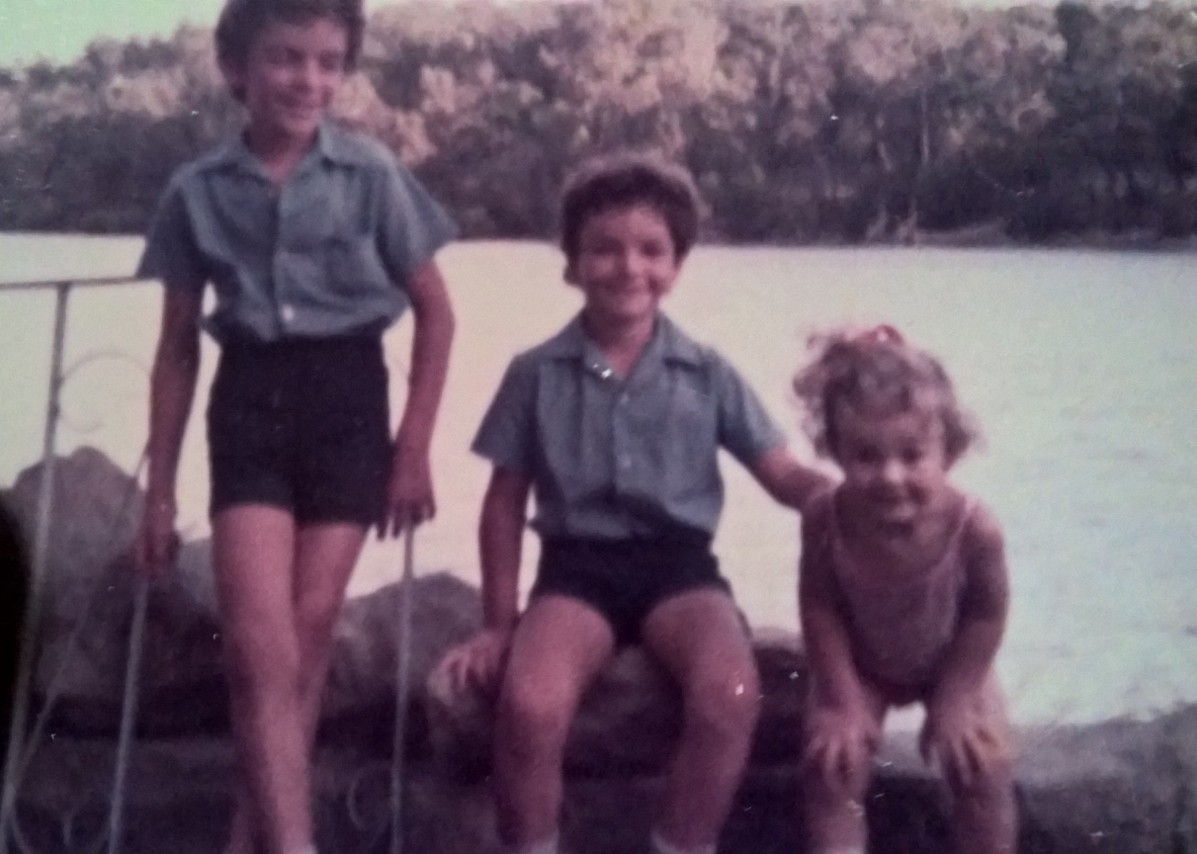
I remember frequently paddling my brother's windsurfer board from our house straight down the river to the boatshed then up to restaurant. I am proud that my dad was open enough to hire chefs from all over the world—from China, from Korea, and many Skiparoos too. I remember a different time, a different life, and the diverse group of respectful people who were part of it. Losing the property meant losing wealth accumulated across generations. There are still questions about what happened, and I may never have all the answers.
But my grandmother gave me something that losing the mountain could not take away.
Her teachings.
What Wealth Really Means
Looking back, I see a powerful balance between her two lessons.
Be independent enough to build something meaningful, but be content enough not to let its loss destroy you.
Years later, I learned a phrase in China from a group of people I had come to know quite well. To this day, I believe they genuinely had my future well-being at heart: 有失就有得 (yǒu shī jiù yǒu dé). Where there is loss, there is gain.
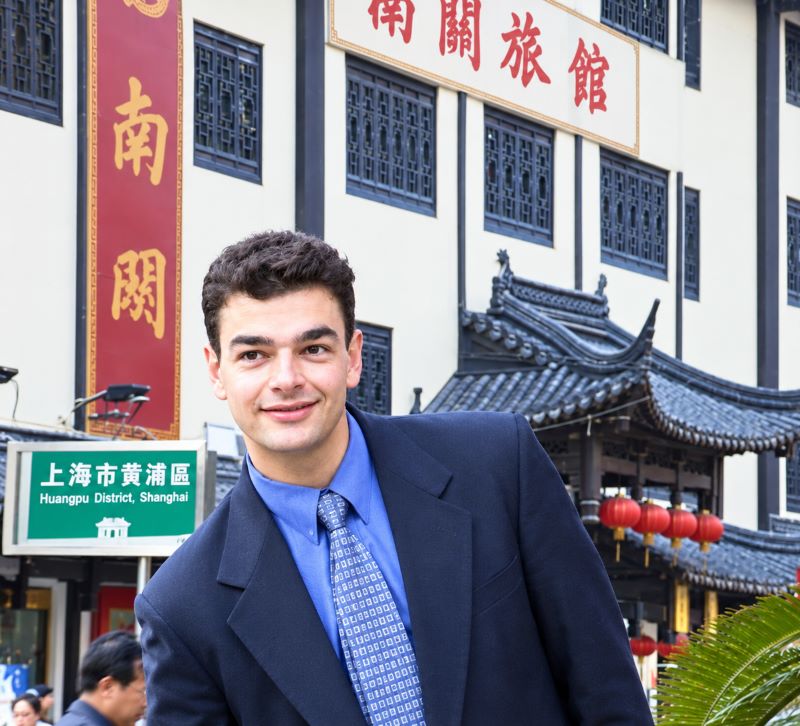
That phrase perfectly mirrors my grandmother's life. Losing the mountain cost us our wealth, our foundation, and even my grandfather. But my grandmother's response to that loss—her fierce independence and her contentment—gave me the greatest inheritance of all.
There is nothing wrong with ambition. There is nothing wrong with building wealth, creating businesses, or pursuing a dream. But if your entire sense of worth depends on what you own, you risk losing much more than possessions when circumstances change.
My grandmother's words helped shape my perspective. They didn't determine every belief I hold, but they became foundations upon which I built many others.
Perhaps that is the real purpose of passing wisdom between generations: not to tell the next generation exactly how to live, but to give them principles they can carry forward, question, develop, and make their own. Sometimes, we even find those same principles echoed in entirely different cultures, spoken by entirely different people, proving that some truths are universal.
A Legacy That Continues
I suspect these teachings came from someone before my grandmother, perhaps her own grandfather. If so, he passed something forward that survived circumstances, hardship, and the passage of time.
My grandmother continued that tradition by teaching me.
And now, by writing these words down, I am preserving a small part of it myself.
The property is gone. The wealth accumulated by our family is gone. But the lessons remain.
Build what you can. Stand on your own feet. And learn to be content with what you have.
Because perhaps the richest person isn't the one who accumulates the most, but the one who can lose almost everything material and still understand what matters most.
That is the wealth my grandmother left me.