Ending Counterfeit D2C Abuse: The Brand-Verified Enforcement Model
How global marketplaces can eliminate counterfeit distribution without destroying global trade.
When Plausible Deniability Ends
Global direct-to-consumer platforms have long relied on scale as a defence. The argument is familiar: millions of sellers, millions of listings, and enforcement challenges that are “too complex” to manage perfectly.
That defence collapses the moment a brand owner explicitly confirms non-authorisation — and the sales continue.
A Verified Case: Brand Denial, Platform Continuation
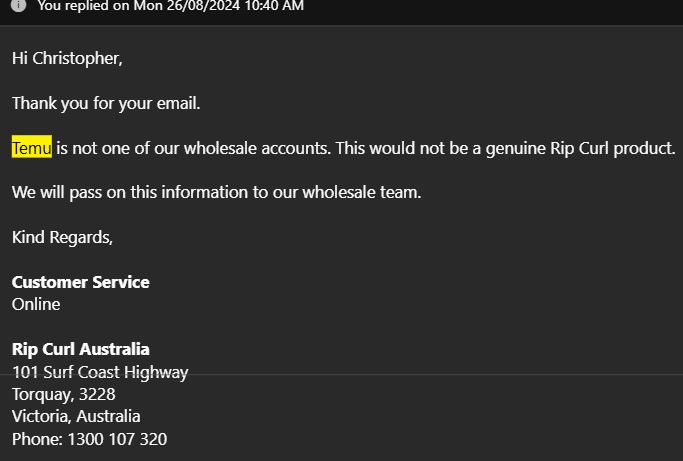
In August 2024, Rip Curl Australia confirmed in writing that products sold under the Rip Curl name on Temu were not genuine and that Temu was not an authorised wholesale partner.
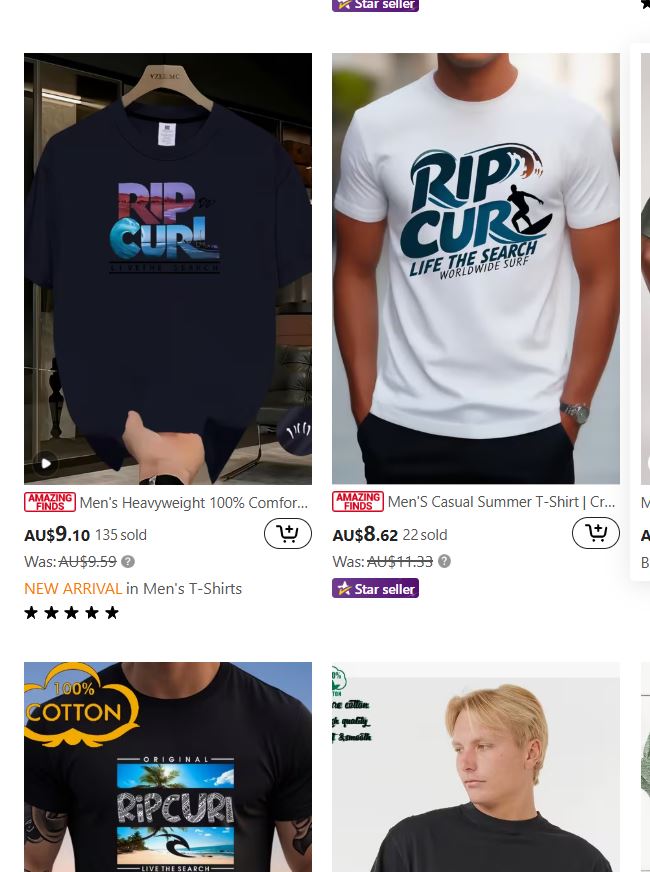
Despite notification, a search conducted in 2026 reveals hundreds of Rip Curl-branded products actively promoted, rated, and sold to Australian consumers. These listings display no disclaimers, no authorisation notices, and no consumer warnings.
This establishes a critical threshold: brand-verified denial combined with continued platform facilitation.
At this point, the issue is no longer seller misconduct. It is platform-level failure.
The Gatekeeper Barrier: Membership as a Pre-requisite for Justice
Compounding this failure is a structural obstruction: platforms like Temu often require mandatory account registration or membership simply to report a violation or contact the platform. This creates a "pay-with-data" wall for rights holders and consumers seeking to report illegal activity.
Forcing a brand owner to enter into a contractual relationship (membership) with a platform just to report that their intellectual property is being stolen is a fundamental subversion of legal transparency. In the context of Australian Consumer Law (ACL) and Privacy Principles, this practice is inherently wrong—it obstructs accessible redress and violates the principle of data minimisation by requiring a commercial relationship as a condition for legal reporting.
Why This Is a Structural, Not Isolated, Problem
The persistence and scale of unauthorised branded listings demonstrate that current enforcement models are insufficient by design. When platforms can localise pricing, promote listings, rank popularity, and process payments, they cannot credibly claim neutrality.
Marketplaces are no longer passive intermediaries. They are retail infrastructure.
The Brand-Verified Enforcement Model
The solution is not hostility, protectionism, or trade restriction. It is a structural correction that aligns global commerce with basic legal accountability.
1. Brand Authority Override
Verified trademark owners must have immediate takedown authority over unauthorised listings using their brand identity. Once denied by the rights holder, listings are removed by default until proof of authorisation is provided.
2. Open Redress Channels (No Membership Required)
Reporting mechanisms must be public and accessible. Platforms must allow brand owners and consumers to report counterfeit activity without requiring account creation or data harvesting.
3. Post-Notice Platform Liability
Once a platform is notified by a verified brand owner, continued sales transfer liability from individual sellers to the platform itself. Each additional sale becomes a compliance failure.
4. Proof-of-Authorisation Before Listing
Branded goods should not be listed without verifiable authorisation. This includes contractual proof, brand registry approval, or supply-chain validation. No proof, no listing.
5. Destination-Based Compliance by Default
Products must comply with the laws of the destination market, not the country of origin. Geo-blocking illegal or unauthorised goods is technically trivial and should be mandatory.
6. Customs and Platform Synchronisation
Flagged counterfeit or unauthorised SKUs should be blocked before shipment, not after delivery. Enforcement must occur upstream, where harm is prevented rather than remedied.
7. Escrow and Penalty Mechanisms
Revenue from branded goods should be held in escrow until authenticity is verified. Counterfeit confirmation triggers automatic refunds and platform-funded penalties.
Why This Model Preserves Global Trade
This framework does not punish legitimate manufacturers, ethical platforms, or authorised sellers. It rewards them. Compliance becomes cheaper than violation, and trust becomes a competitive advantage rather than a liability.
Platforms that already operate responsibly would see minimal disruption. Those built on enforcement avoidance would be forced to adapt or exit.
The Final Reality
Global trade depends on trust. Trust depends on accountability. When platforms knowingly facilitate unauthorised branded sales and obstruct reporting behind membership walls, they forfeit neutrality.
This is not a call for confrontation. It is a call for correction.
The future of direct-to-consumer commerce belongs to systems that respect law, brands, and consumers equally. Anything less is not disruption — it is decay.